Magnesium is the mineral involved in the building of your bones, muscle contraction, and nerve signaling. Magnesium is called the “master mineral” because it handles more than 300 metabolic processes in your body. In this article, we take a closer look at the signs and symptoms of low magnesium.
Magnesium is a nutrient – specifically a mineral – that plays an integral role in your body’s ability to keep your heart, kidneys, and muscles healthy. It also regulates the levels of other nutrients in your body and keeps your bones strong.
There are several health benefits of magnesium. Here are the most commonly repeated benefits of magnesium.
[/vc_column_text][/vc_column][/vc_row][vc_row][vc_column][vc_column_text]Since magnesium contributes to the relaxing of bronchial muscles, it can be helpful to prevent the onset of an asthma attack or to help stop one. In fact, doctors recommend magnesium to patients who are in the hospital due to respiratory distress. It is available intravenously or nebulized for this purpose. [/vc_column_text][/vc_column][/vc_row][vc_row][vc_column][vc_separator color=”turquoise” style=”shadow”][/vc_column][/vc_row][vc_row][vc_column][vc_column_text]
Magnesium is essential for bone formation. It regulates the calcium levels in your body and activates vitamin D synthesis in the kidneys. You store more than 50 percent of magnesium in your bones.
Studies show that a higher magnesium intake leads to a higher bone mineral density. Further, they show that a healthy magnesium intake throughout life can put you at a lower risk of developing osteoporosis.
Magnesium works as a muscle relaxant. As such, it can speed the recovery from muscle spasms and cramps. This holds true for those caused by disease or external trauma alike.
If you increase your intake of this vital mineral, it can help injured bones and take the pressure off a compensating muscle. This, in turn, can ease the likelihood of muscle cramping and trauma.
Researchers at the Indiana University School of Public Health showed magnesium reduces blood pressure. But, there has been no evidence that healthy magnesium levels can prevent blood pressure problems from starting.
The heart is – after all – a muscle. We have already established that magnesium is a muscle relaxant. Magnesium helps by regulating the heartbeat and protect the heart from muscle stress.
Issues such as muscle cramps, pain, or indigestion are all stressors, which can put undue pressure on the cardiovascular system. Magnesium helps to ease these ailments and thus, takes pressure off the heart.
Furthermore, magnesium can lower cholesterol and blood pressure – as stated above. These are the two leading causes of heart attacks.
Medical professionals know that the rapid administration of magnesium after a heart attack can reduce the risk of death. It is even used to treat congestive heart failure by reducing the risk of arrhythmia.
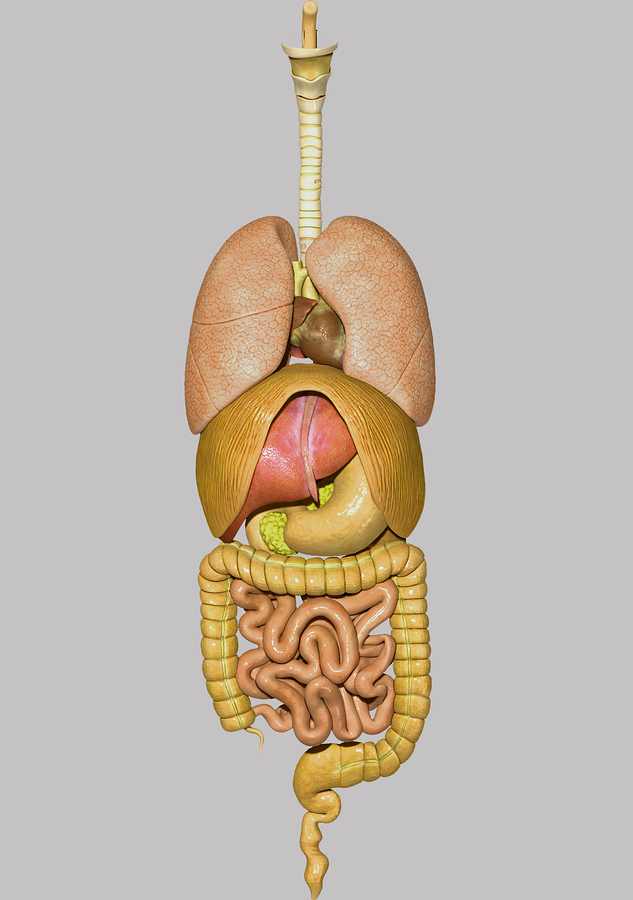
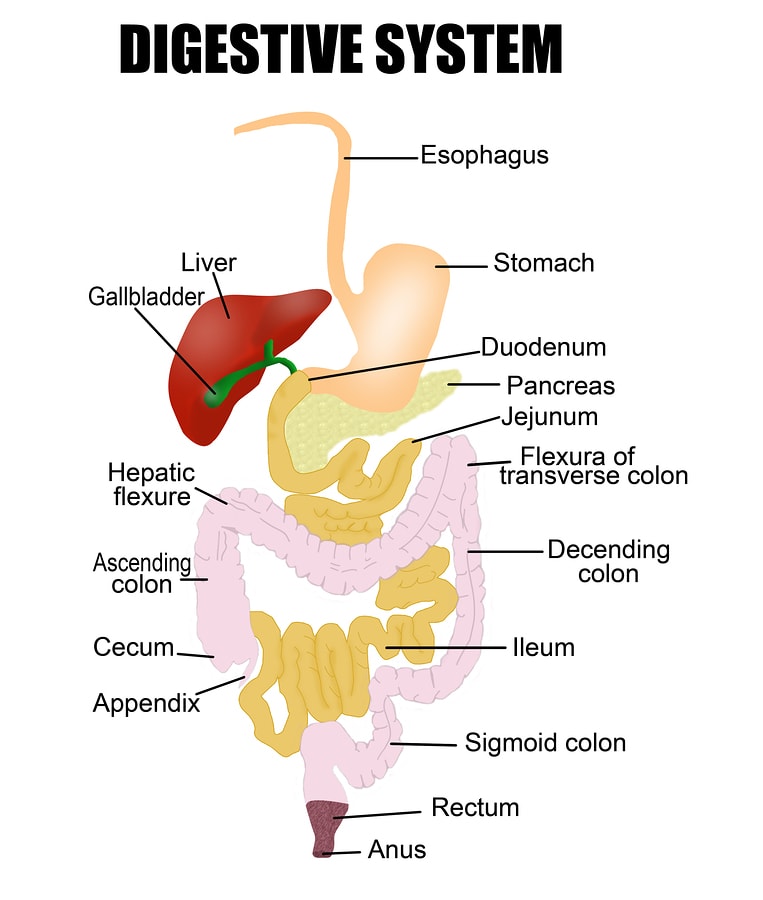
Magnesium can help to relieve and prevent constipation. As a muscle relaxant, it relaxes the intestinal muscles, which allows for a smoother peristalsis rhythm.
This is the rhythmic tightening in the walls of tubular organs that pushes the contents forward. Further, magnesium attracts water to the intestines. This softens stool and eases constipation.
If you have chronic constipation, water-soluble magnesium supplements have a laxative effect. Many over the counter (OTC) laxatives include magnesium in their ingredients.
[/vc_column_text][/vc_column][/vc_row][vc_row][vc_column][vc_column_text]Magnesium helps to regulate insulin’s reaction to blood sugar levels by reducing insulin resistance. Magnesium deficiency is common among those with type II diabetes.[/vc_column_text][/vc_column][/vc_row][vc_row][vc_column][vc_separator color=”turquoise” style=”shadow”][/vc_column][/vc_row][vc_row][vc_column][vc_column_text]
Magnesium plays a significant role in mood and brain function. In fact, lowered levels can cause mild anxiety or depression.
Research has shown that during times of significant stress, you use up the magnesium supply in your body more quickly.
This leads to more stress which leads to using up more magnesium which leads to more stress which continues into infinity… Unless you stop it by adding more magnesium. This only works though if magnesium deficiency is the cause of the anxiety, depression, or stress.
One of the critical roles of magnesium is to dispose of lactic acid. Lactic acid can build up in the muscles and cause pain.
In one study, researchers split twenty-five professional volleyball players into two groups. The first group was the experimental group. They gave them magnesium supplements over four weeks.
These subjects showed a reduction of lactic acid and improved range of motion over the control group. They gave the second group – the control group – nothing.
Magnesium strengthens contractions by sending stronger signals to the muscles from the brain. This may boost your workout, and it will enhance your bones, tendons, and ligaments. Magnesium can even help to relax your muscles after a workout.
It Can Help Men Prevent or Avoid the Dreaded Low Testosterone
[/vc_column_text][/vc_column][/vc_row][vc_row][vc_column][vc_column_text]Magnesium is a crucial ingredient in the formation of the leading male hormone, testosterone. Raising your levels of magnesium can help to increase fertility, virility, and sexual performance.[/vc_column_text][/vc_column][/vc_row][vc_row][vc_column][vc_separator color=”turquoise” style=”shadow”][/vc_column][/vc_row][vc_row][vc_column][vc_column_text]
Brain plasticity is the ability of the brain to grow and change its shape in response to its experiences and learning. This occurs through the growth of new neurons and the formation of new connections between those neurons.
Getting adequate levels of magnesium can help to improve your ability to learn new skills quickly. It can even help to prevent age-related cognitive decline.
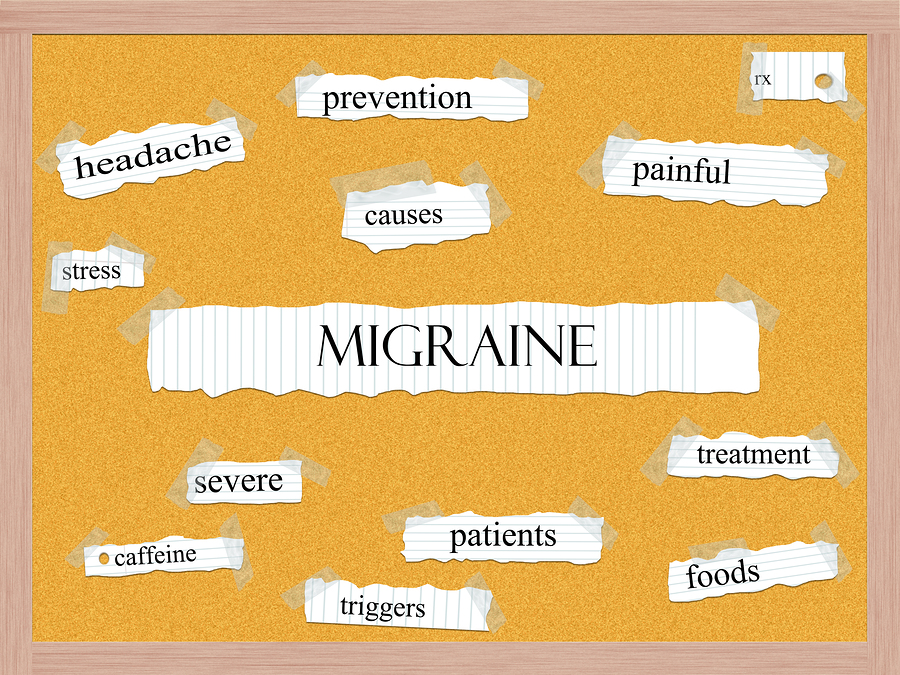
Nobody likes the pounding, stabbing pain of a headache, or worse yet, a migraine. Magnesium can help with that.
By improving the body’s circulation and relaxing the muscles, magnesium can help to ease headaches caused by tension and stress. Stress is, after all, the leading cause of headaches. If you have a magnesium deficiency, then you are at higher risk of getting that agonizing pain in your head.
In one study in the American Journal of Neurological Discover, researchers gave patients who suffered from migraines magnesium supplements for twelve weeks. Within nine to twelve weeks, all the patients reported a reduction in migraine attack frequency. In fact, they estimated the average total decrease of 41.6 percent.
There are more benefits of magnesium including increased vitamin and mineral absorption, aiding with sleep, and more. Explore some of them on your own to further your understanding
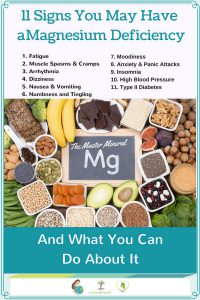
Hypomagnesemia is the medical term used within the medical community for magnesium deficiency.
It causes symptoms that include anxiety, trouble sleeping, and muscle spasms, among others. It’s caused by not consuming enough magnesium or because of a difficulty absorbing the mineral. It is often overlooked as a source of a symptom and rarely tested.
This is one of the earliest and most common symptoms of a magnesium deficiency. It is also a symptom of several other conditions often overlooked by doctors during diagnosis. It usually takes quite some time before a doctor will think to check your magnesium levels.
Magnesium helps produce and transport energy throughout your body. If your levels are not high enough, it will leave you feeling weak and tired. If it is a magnesium deficiency, then it will not go away until your magnesium levels are right again.
The heart beats with an irregular or abnormal rhythm in this condition.
Magnesium plays an essential role in your heart health as well since it is vital for proper muscle contraction.
Studies have shown that maintaining a regular level of magnesium may prevent some heart diseases. In fact, health care providers often use it in medical settings for managing arrhythmia problems. It helps you maintain a healthy heart rhythm.
There have been several studies focusing on how magnesium affects the heart. The vast majority of those studies confirms the above findings and also found that magnesium can lower the risk of heart attacks.
As with most of the symptoms of magnesium deficiency, dizziness is a symptom. Thus, it is also predictably overlooked as a cause during diagnosis.
When dizziness is a result of a magnesium deficiency, then it will not simply ‘go away’ as it does with most other conditions. It can last all day or for several days without relief. If left untreated it can become more severe.
In that case, the magnesium deficiency can give you feelings mimicking those of vertigo. Merriam-Webster defines vertigo as, “a sensation of whirling and loss of balance.” As the magnesium deficiency worsens so, do the symptoms.
These symptoms of a magnesium deficiency can deeply affect your life. It can leave you unable to do daily tasks including going to work. That is why if you are experiencing dizziness it is in your best interest to suggest your doctor test your magnesium levels.
Doctors often overlook a magnesium deficiency as a cause of nausea and vomiting. Luckily, it is rarely considered a severe symptom of a magnesium deficiency.
Whether a severe symptom or not, this can have an enormous impact on your routine day-to-day life. It is hard to drive to work, let alone do your job when you are throwing up or feeling like you are going to at any moment.
Nausea and vomiting are also signs that your magnesium levels are too high. This rarely happens from dietary consumption of magnesium. Instead, it occurs mostly from taking too much magnesium in supplement form.
Magnesium deficiency impacts the nervous system often leading to tingling and numbness. This is an early warning sign that you need more magnesium. If your deficiency continues to worsen, so will these symptoms.
Without enough magnesium, nerve and muscle functions will not act and react appropriately. It can also prevent your body form sending the proper signals to your face, hands, and feet. This will result in those areas experiencing numbness and tingling.
Severe symptoms like this are rare, and they are scary. It is also not a symptom that you should take lightly. It is essential to see a doctor and find the cause.
A magnesium deficiency can result in abnormal amounts of irritability and confusion. It can seem like it ambushed you out of nowhere. Even simple tasks can seem overwhelming when your magnesium levels are low.
Again, this is a symptom often misdiagnosed, or at the very least overlooked. The lack of sleep mentioned in symptom one can make this symptom worse.
Although there can again be many causes for this symptom, if you experience these with regularity then it could be due to a magnesium deficiency. With this severe symptom, it behooves you to request your doctor check every possible cause including your magnesium levels.
Unfortunately, the stress of an anxiety or panic attack can lower your magnesium levels further and begin a vicious cycle. Lower magnesium causes anxiety with then depletes the magnesium reserves during the attack, and around and around we go!
The symptoms of a panic attack include:
Chest pains
Tingling in your limbs
Difficulty breathing
Trembling
Racing heart
An intense rush of fear and dread, and more.
They generally only last a few minutes. To the person experiencing the panic attack, it can feel like an eternity and leave them emotionally drained.
Your body needs the proper amount of magnesium to control the electrical conduction of neurons in your muscles. This then leads to the prolonged opening of your calcium channels and increased muscular activity.
This can cause conditions such as Restless Leg Syndrome (RLS). RLS is a condition that causes your legs to move involuntarily during the night. This unintentional activity can keep you awake and add to the fatigue caused by your magnesium deficiency. That deficiency can also be keeping you awake as well.
A study in the International Journal of Hypertension showed the correlation between blood pressure and magnesium levels. The results showed that people with the healthiest blood pressure also had the highest magnesium levels.
Further, a study published in the American Journal of Clinical Nutrition concluded that eating magnesium-rich foods and absorbing roughly 100 milligrams of magnesium a day would decrease the risk of having a stroke by 8 percent. You can lower blood pressure through magnesium intake.
While this might sound strange initially as we all know diabetes has to do with sugar and insulin levels. But, once the correlation is explained it makes quite a bit of sense.
The Journal of Internal Medicine published a study that found that magnesium plays a significant role in the metabolism of sugar. Type II diabetes develops based on diet and thus is at the mercy of a proper balance of nutrients within your body.
The study found that those with low levels of magnesium levels were ten times more likely to have Type II diabetes than those with healthy levels. A magnesium-rich diet or supplement can help.
Further, there is the option to add magnesium supplements to your routine. As with anything else, you should always consult your doctor before you take any dietary supplement. The best forms of magnesium are: Magnesium Citrate, Magnesium Malate, and Magnesium Glycinate.
But, if your doctor okays you to supplement magnesium, make sure you do not overdo it. This is because the effects of too much magnesium can be as bad as the effects of too little magnesium.
This ‘Master Mineral’ has several benefits even though it is not one of the most well-known nutrients in the body.
Whether it is helping your heart, bone, or muscle health, relieving muscle spasms, or preventing the onset of diabetes… Magnesium is an essential mineral you need.
If you discover you have these signs and symptoms of low magnesium and are unable to eat enough magnesium-rich food, magnesium supplements are also available.
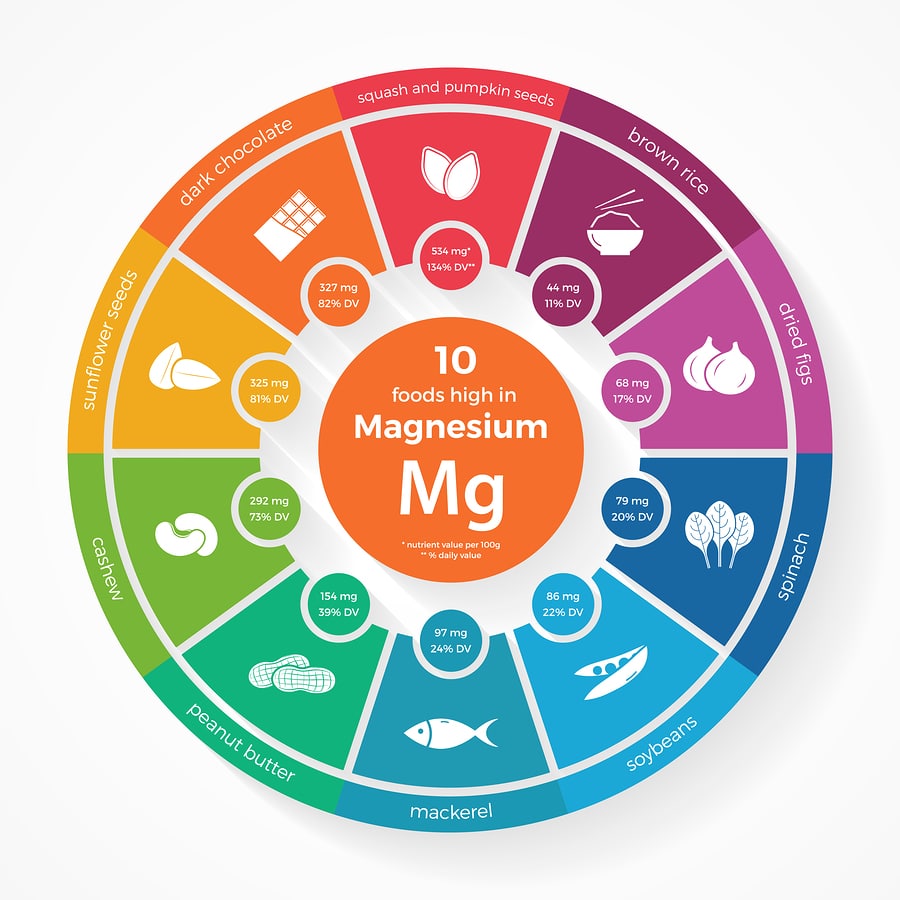
I am a huge believer that we should seek first to get nutrition from foods. But if you are not getting the magnesium you need from these best magnesium-rich foods, it is in your best interest to take a high-absorption magnesium supplement.


 [/vc_column_text][/vc_column][/vc_row][vc_row][vc_column][vc_column_text]


 [/vc_column_text][/vc_column][/vc_row][vc_row][vc_column][vc_column_text]

 [/vc_column_text][/vc_column][/vc_row][vc_row][vc_column][vc_column_text]
 [/vc_column_text][/vc_column][/vc_row][vc_row][vc_column][vc_column_text]